Quick answer
What should I pack for a Jibhi trip?
For a Jibhi trip, pack layers you can add or remove, a warm jacket for nights, a rain jacket, good walking shoes with grip, some cash, ID, a power bank, a small first aid kit and basic toiletries. In winter add thermals, gloves, a cap and snow-friendly shoes. Pack light and carry one small daypack.
Key takeaways
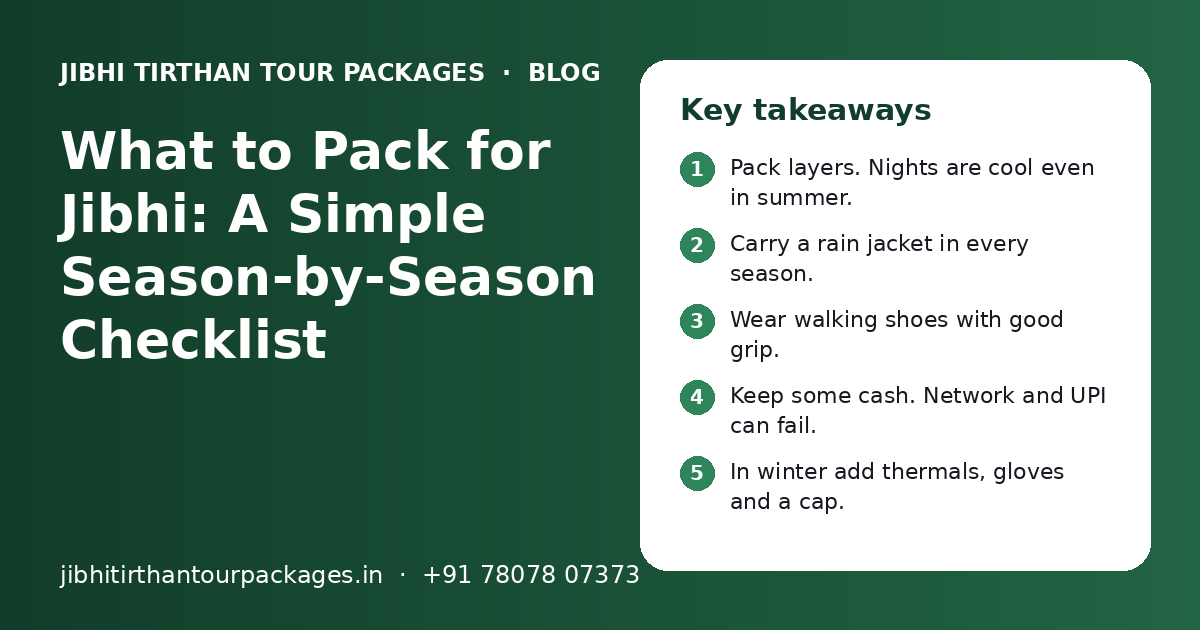
- Pack layers. Nights are cool even in summer.
- Carry a rain jacket in every season.
- Wear walking shoes with good grip.
- Keep some cash. Network and UPI can fail.
- In winter add thermals, gloves and a cap.
- Carry one small daypack for day walks.
What should you pack for a Jibhi trip?
For a Jibhi trip, pack light layers, one warm jacket, a rain jacket, comfortable walking shoes, ID, some cash, a power bank and a small first aid kit. Add more warm clothes in winter.
Jibhi is in the Banjar area of Kullu district in Himachal Pradesh. It sits in a green valley with forests, streams and wooden houses. Most people come here to relax, walk to small waterfalls, visit Chehni Kothi, drive up to Jalori Pass and walk to Serolsar Lake. None of this needs fancy gear. But the weather in the hills changes fast, and shops nearby are small. So it helps to carry the basics from home.
Here is a quick list of what almost every traveller needs, in every season.
| Item | Why you need it | Season |
|---|---|---|
| Warm jacket or fleece | Mornings and nights are cool in the valley | All seasons |
| Rain jacket or poncho | Sudden showers are common in the hills | All seasons, must in monsoon |
| Walking shoes with grip | Paths can be muddy, rocky or slippery | All seasons |
| Thermal inner wear | Cold nights and snow days | October to March |
| Gloves, woollen cap, socks | Hands, head and feet get cold first | Winter, also for Jalori Pass |
| Sunglasses and sunscreen | Strong sun at height and on snow | All seasons |
| Power bank | Power cuts can happen in bad weather | All seasons |
| Small daypack | For water, snacks and a layer on day walks | All seasons |
| Some cash | Network can drop and UPI may not work | All seasons |
If you are still deciding when to go, our guide on the best time to visit Jibhi explains what each season feels like. That will help you decide how warm your bag needs to be.
What clothes should you pack for Jibhi in each season?
Pack light cotton and one fleece in summer, quick-dry clothes and a rain jacket in the monsoon, and heavy woollens with thermals in winter. Layers work better than one very thick jacket.
Jibhi is at a fair height, so it stays cooler than the plains. Days can feel warm in the sun, but it gets cool as soon as the sun goes behind the hills. The idea is to wear thin layers you can add or take off as the day changes.
| Season (rough) | Weather feel | Clothes to pack |
|---|---|---|
| Spring (March to April) | Pleasant days, cold nights, some old snow up high | T-shirts, 1 to 2 sweaters, a warm jacket, light thermals for night |
| Summer (May to June) | Warm days, cool evenings | Cotton T-shirts, full pants, a light fleece or hoodie, a cap |
| Monsoon (July to mid September) | Rain, fog, wet paths, landslide risk on roads | Quick-dry clothes, rain jacket, extra socks, a plastic cover for clothes |
| Autumn (mid September to November) | Clear skies, cool days, cold nights | Full sleeves, a fleece, a warm jacket, light thermals |
| Winter (December to February) | Very cold, snow possible | Thermals, sweaters, a heavy down or padded jacket, woollen socks, gloves, cap |
The simple layering rule
- Base layer: a T-shirt in summer, or thermals in winter.
- Middle layer: a sweater, fleece or hoodie.
- Outer layer: a warm jacket, and a rain jacket on top if it rains.
With these three layers, you can handle a sunny walk to a waterfall and a cold evening by the stream on the same day.
What shoes are best for Jibhi, Jalori Pass and Serolsar Lake?
Wear closed walking or trekking shoes with a good grip sole. They should already be worn in. Add a pair of slippers or floaters for the stay.
Most walks around Jibhi are on village paths, forest trails and small slopes. The walk from Jalori Pass to Serolsar Lake is a forest trail of a few kilometres each way. It can be muddy after rain and slippery with snow or ice in colder months. Smooth city sneakers can slip on wet stones and roots.
Walking or trekking shoes
Closed shoes with deep grip. Ankle support helps on rocky or snowy trails.
Floaters or sandals
Handy at the stay, near streams and on warm days in the village.
Snow-friendly boots
For a winter trip, waterproof boots keep your feet dry in snow and slush.
Good socks
Carry cotton socks for summer and woollen socks for cold days. Pack extra pairs in the monsoon.
Never wear brand new shoes on a trek. Walk in them at home for a week first, so you do not get blisters on the trail.
Planning the Serolsar Lake walk? Read our Jalori Pass and Serolsar Lake trek guide for the route, the effort and tips on timing.
What documents, cash and phone items should you carry?
Carry a government photo ID, your bookings on paper or offline on your phone, some cash, a power bank and a charging cable. Do not depend only on mobile data.
Jibhi is a village, not a town. Mobile network works in many places but can be weak in some pockets and on the drive to Jalori Pass. Small shops and dhabas may take UPI, but when the network drops, cash is the only option. ATMs are few in the area, so draw cash in a bigger town on the way.
- Original government photo ID for every adult (Aadhaar, driving licence, passport or voter ID)
- Photocopy or phone photo of each ID
- Hotel, homestay and cab booking details saved offline
- Bus or flight tickets saved offline
- Enough cash for small spends for the full trip
- One debit card as backup
- Phone charger and a full power bank
- Two SIMs from different networks, if you can
- Offline map of the Jibhi and Banjar area downloaded
- Driving licence and car papers if you are self-driving
If you are coming by bus or car, our how to reach Jibhi guide explains the routes and where you may change vehicles.
Need help with your project?
Talk to the Jibhi Tirthan Tour Packages team. Free first call, simple advice, clear quote.
What medicines and health items should you pack for Jibhi?
Pack your regular medicines, a small first aid kit and basic items for travel sickness, cold, stomach upset and minor cuts. Medical shops nearby are limited, so do not plan to buy everything there.
The roads to Jibhi have many curves. Some people feel sick on the drive. Cold weather can bring a sore throat. New food and water can upset the stomach. A small kit takes very little space and saves a lot of trouble.
- Your regular prescribed medicines, with a little extra in case of delays
- A copy of your prescription
- Something for motion sickness, as advised by your doctor
- Basic pain and fever medicine you normally use
- ORS packets
- Band-aids, antiseptic cream and cotton
- Crepe bandage for a twisted ankle
- Lip balm and moisturiser for dry, cold air
- Sunscreen and sunglasses
- Hand sanitiser and tissues
Jalori Pass is much higher than Jibhi. It is roughly around 3,000 metres or a little more. Most healthy people are fine on a short visit, but go slow, drink water and come down if you feel unwell. If you have a heart or lung condition, or you are pregnant, ask your doctor before the trip.
What extra things should families and couples pack?
Families should add kids' warm clothes, snacks, wet wipes and a few spare outfits. Couples can add a light shawl, a small speaker, a book and a good camera for slow, scenic days.
A trip with small children or older parents needs a little more planning. The cars ride long hours on hill roads. Food options on the way can be simple. So carry the things your family uses every day.
Extra for families
- Warm clothes, caps and socks for kids, with spares
- Dry snacks, biscuits and fruit for the drive
- Wet wipes, tissues and a few plastic bags
- Kids' medicines and a thermometer
- A light blanket or shawl for the car
- Small games or books for slow evenings
Extra for couples
- A light shawl or stole for evening walks
- A good camera or phone lens for photos
- A small torch or headlamp for walks after dark
- A book, journal or cards for quiet evenings
- A thermos for hot tea by the river
- Comfortable clothes for long cafe afternoons
For trips planned around kids and parents, see our Jibhi family tour package. If you are planning a romantic trip, our Jibhi honeymoon package has ideas for calm stays and slow days.
What should you pack for a winter or snow trip to Jibhi?
For a winter trip, pack thermals, a heavy jacket, woollen socks, waterproof gloves, a woollen cap, waterproof boots and lip balm. Also plan for road closures after heavy snow.
In winter, Jibhi gets cold, especially at night and early morning. Snow can fall in the village and is more common at Jalori Pass. Snow is beautiful, but cold and wet clothes can spoil a trip. Keep your feet, hands and head warm and dry.
- 1
Start with thermals
Pack two sets of thermal tops and bottoms so one can dry while you wear the other.
- 2
Add warm middle layers
Carry two sweaters or fleece jackets instead of one very thick one.
- 3
Top with a heavy jacket
A padded or down jacket with a hood works well. A water-resistant outer helps in snow.
- 4
Protect hands and head
Carry waterproof gloves, a woollen cap and a neck warmer or muffler.
- 5
Keep feet dry
Wear waterproof boots and pack extra woollen socks. Wet socks make you cold fast.
- 6
Plan for delays
Keep an extra day free. Heavy snow can close the Jalori Pass road for days.
For self-drive in winter, ask about snow chains and drive only in daylight. If you are not used to snow driving, hire a local cab with an experienced driver.
What should you not pack, and what packing mistakes should you avoid?
Do not pack too much, heavy suitcases, smart shoes or lots of plastic. The most common mistakes are forgetting a rain jacket, wearing new shoes and carrying no cash.
Many stays in Jibhi are homestays and small cottages. Some are a short walk from the road, sometimes up steps or a slope. A huge suitcase can be a real pain there. A backpack or a soft duffel bag is much easier.
| Common mistake | What happens | What to do instead |
|---|---|---|
| Packing only for warm days | You feel cold every evening | Always carry one warm layer |
| No rain jacket | Clothes and phone get wet in sudden rain | Pack a light rain jacket or poncho |
| New or smooth-soled shoes | Blisters and slips on trails | Wear worn-in shoes with good grip |
| Only UPI, no cash | Stuck when the network drops | Carry enough cash for small spends |
| Big hard suitcase | Hard to carry up steps to the stay | Use a backpack or soft bag |
| Too many single-use plastics | Adds to litter in the valley | Carry a steel bottle and cloth bag |
Travel light, leave no trace
Tirthan Valley and the Great Himalayan National Park area are known for clean rivers and forests. Please carry a reusable water bottle, bring your waste back to the stay and do not leave plastic on trails or near streams. Respect local homes and temples, and ask before taking photos of people.
How should you pack if you travel by bus, cab or self-drive?
If you come by overnight bus, keep a small bag with warm clothes, snacks and medicines with you. For cabs and self-drive, keep a daypack in the car with water, a layer and motion sickness items.
Many travellers from Delhi and Chandigarh take an overnight bus towards Aut or the Kullu side, then a cab or local bus to Jibhi. Others drive all the way. Your packing should match how you travel.
| How you travel | Keep with you | Packing tip |
|---|---|---|
| Overnight bus | Jacket, neck pillow, water, snacks, medicines, phone charger | Main bag goes below, so keep valuables and warm clothes in your hand bag |
| Cab from a city | Daypack with water, snacks, a layer and motion sickness items | Tell the driver if you need breaks on the curves |
| Self-drive car | Car papers, licence, first aid kit, torch, spare tyre check | Fill fuel in a bigger town and carry some cash for tolls and parking |
| Bike trip | Riding jacket, gloves, rain cover for bags, tool kit | Pack in waterproof bags and tie them down well |
If you are starting from the capital, our Delhi to Jibhi tour package can include the cab or bus, so you only need to think about your bag. You can also see a sample day plan in our 3 days in Jibhi itinerary and pick what to pack for each day.
Once your bag is ready, look through our list of things to do in Jibhi and plan your days. Want help with stays, cab and sightseeing? Call or WhatsApp +91 78078 07373, share your dates and get a trip plan and a clear quote.
Frequently Asked Questions
Do I need a heavy jacket for Jibhi in summer?
You do not need a very heavy jacket in summer, but you do need a warm fleece or light jacket. Days can feel warm in the sun, yet mornings and evenings are cool. If you plan to go up to Jalori Pass, it will be colder there, so one proper warm layer is a good idea.
What shoes should I wear for the Serolsar Lake walk?
Wear closed walking or trekking shoes with a good grip sole that you have already worn in. The forest trail can be muddy after rain and slippery with snow or ice in colder months. Smooth sneakers and sandals are not a good choice. Carry an extra pair of socks in your daypack.
Is there an ATM in Jibhi?
ATMs are few in the Jibhi area, and they may not always work. It is safer to draw enough cash in a bigger town on the way. UPI works in many places, but when the mobile network drops you may need cash for small shops, dhabas and local taxis.
What should I pack for Jibhi in December or January?
For December or January, pack two sets of thermals, warm sweaters or fleece, a heavy padded jacket, woollen socks, waterproof gloves, a woollen cap and waterproof boots. Add lip balm and moisturiser for dry air. Keep a spare day in your plan, as snow can close roads for some time.
Do I need to carry a rain jacket to Jibhi?
Yes, a light rain jacket or poncho is useful in every season, and a must from July to mid September. Hill weather can change fast and short showers are common. A rain cover for your backpack and a plastic bag for your phone and documents also help.
Can I buy warm clothes and other things in Jibhi?
Jibhi has only small shops with basic items like snacks, water and some daily needs. You will not find a wide range of jackets, shoes or medicines there. Bigger towns on the way have more options. It is best to bring your main clothes, shoes and medicines from home.
What should I pack for kids on a Jibhi trip?
Pack warm clothes, caps and socks for kids with a few spares, their regular medicines, a thermometer, dry snacks, wet wipes and a light blanket for the car. Small games or books help in slow evenings. Pick kid-friendly shoes with good grip for short walks near the stay.
Is it better to bring a suitcase or a backpack to Jibhi?
A backpack or soft duffel bag is usually better. Some homestays and cottages in Jibhi are a short walk from the road, sometimes up steps or a slope. A big hard suitcase is hard to carry there. Also bring a small daypack for walks and sightseeing.